
The domestic offer and the foreign choice
A Slovenian online casino, and what changes at a foreign brand
A Slovenian online casino is a narrow idea here, which is why most readers end up at a foreign brand with no Slovenian licence. This page explains what actually changes in that move.
Anyone looking for a Slovenian online casino quickly finds that the choice at home is limited. Most of what a reader actually finds and uses comes from foreign brands with no Slovenian licence, not from domestic providers. This page explains why that is, and what changes for a player who settles on such a foreign offer.
An online casino for Slovenian players often means exactly that in practice: a brand registered outside Slovenia that accepts Slovenian players but runs by the rules of another jurisdiction. The difference from a domestic offer is not merely formal; it affects the language, the currency, the support and the route to any complaint. The full list of these profiles with the five criteria is gathered on the home page, online casino Slovenia.
Why the domestic offer is narrow
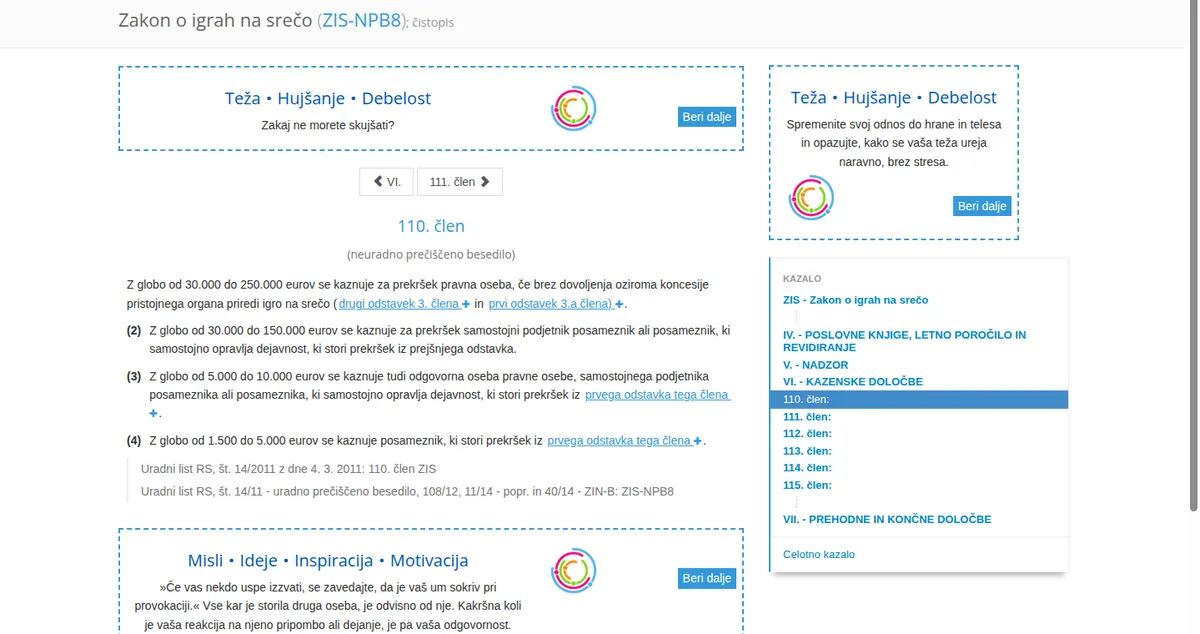
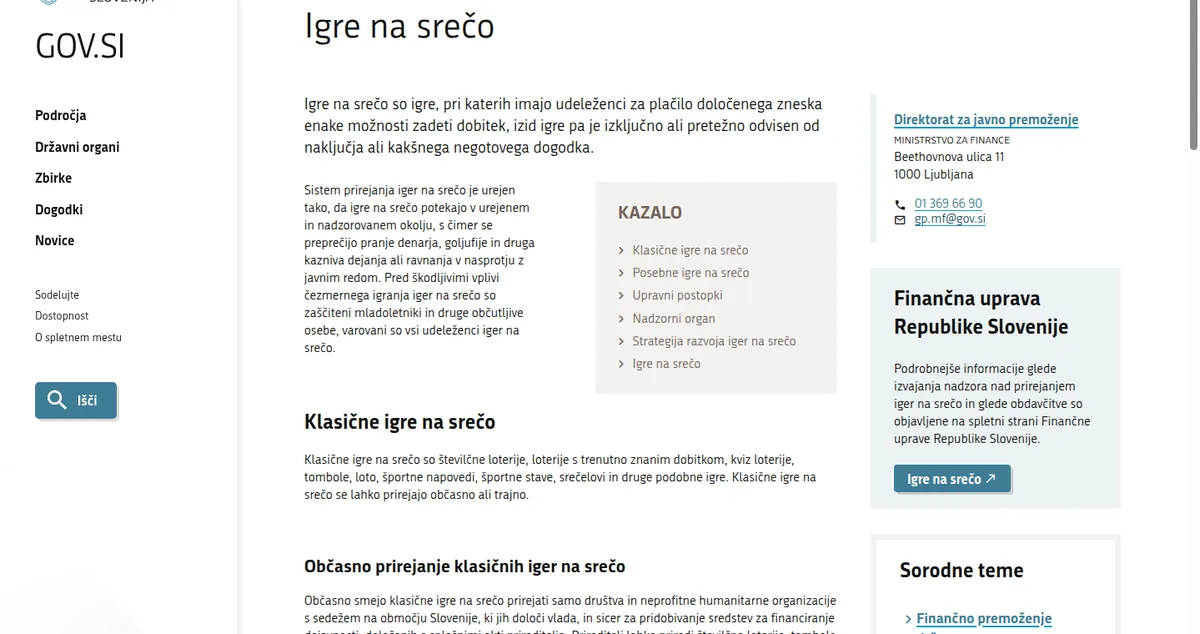
The domestic offer of classic games of chance in Slovenia is strictly limited by the number of providers, and online play has no separate permit of its own. What that means precisely, and who may even apply for such an offer, is explained on the separate page about the law; this page does not go into the legal detail, since its purpose is to compare foreign brands with one another.
The consequence is simple: there are practically no domestic options. Slovenian online casinos with a domestic permit for the web barely exist in this market. A reader looking for such a profile usually ends up at one of the twelve foreign brands assessed in this table, or at one of the 18 names with no score.
What changes at a foreign brand
Moving to a foreign brand brings at least four changes worth knowing in advance.
The language of the site at most foreign casinos is English, and less often available in Slovenian as well. Anyone looking for Slovenian online casinos in their own language will frequently meet an English version of the terms at these twelve profiles, which matters especially when reading the article on identity verification.
The currency of a deposit and a withdrawal at foreign brands is often a cryptocurrency or the US dollar rather than the euro. Some casinos, Bitcasino.io for instance, also allow a euro amount for identity verification, while others, such as Rocketpot, write the threshold solely in US dollars.
Customer support at an online casino for Slovenian players is rarely available in Slovenian; most communicate in English, over chat or by email, with no telephone line for Slovenian players.
The route to a complaint at a foreign brand differs from the one a Slovenian consumer knows at a domestic provider. The practical steps before filing a complaint with an operator that holds no Slovenian licence are set out on the separate page about where to turn in a dispute with an operator.
Examples from the table
A casino for Slovenian players looking for a plainly written verification amount will find only two such cases in this table: Bitcasino.io with 2,500 € under art. 6.6 and Rocketpot with 2,000 to 2,500 USD under art. 12.4 and 11.4. At the other ten, no such amount appears in the terms, which is an important difference when comparing Slovenian online casinos.
For a Slovenian player who puts a confirmed licence above everything else, Bitcasino.io is an instance where the entry in the issuer's register matches exactly the domain they actually visit. The opposite case is Rocketpot, where the licence number from its own terms is marked as not valid in the issuer's register. A fuller comparison of all twelve profiles, each with its own article number and reading date, is on the page about the best online casinos.
A short glossary of the terms used on this page
Slovenian online casino. On this page the phrase “Slovenian online casino” describes the search intent of a reader living in Slovenia and looking for an online casino; it does not mean such a casino actually holds a Slovenian licence. Anyone typing “Slovenian online casino” into a search box lands, in practice, at one of the foreign brands with no Slovenian licence.
Online casino for Slovenian players. This phrase stresses the audience, not the origin of the permit. Each of the twelve casinos in this table is an online casino for Slovenian players in that sense, since it accepts registrations from Slovenia, even though none of them holds a domestic licence.
Slovenian online casinos. When this page writes about the search intent behind “Slovenian online casinos” in the plural, it means the same group of profiles as the other two phrases above. The difference lies only in the wording; the meaning stays the same.
A casino for Slovenian players. This is the last of the four phrases on the page and is used interchangeably with the other three. In the choice among the twelve profiles, every casino for Slovenian players is assessed against the same five criteria, whatever it calls itself in its own marketing.
What to check before you register
Before choosing a foreign profile over a domestic offer, it makes sense to check four things, whichever of the twelve casinos you pick.
First the licence: whether the mark in the site's imprint is entered in the issuer's register against the same domain you will visit. Then identity verification: when it is set off, whether it is tied to an amount and what the deadline for handing over documents is, if one is named at all. Third, the withdrawal limit for a given period, if the terms state one. Fourth, the language of support, since communication in any dispute will run in the language the casino actually offers, not necessarily in Slovenian.
A reader who checks those four points in advance avoids most of the surprises that come with moving from a domestic to a foreign offer.
A fifth, less obvious point is the date on which the terms were read. Because operators' terms change with no particular notice, every figure on this page carries the date it was read; the same is worth recommending to a reader checking the terms themselves. A written date makes it possible to come back later and see whether anything has changed, whereas without one only a general impression remains, anchored to no moment in time and impossible to verify.
A sixth point worth mentioning is the difference between registration and the later identity verification. At most profiles the first step is quick, made up of an email address alone, while identity verification follows only later, on a trigger or before a withdrawal. Equating easy registration with an easy process overall is a common mistake when choosing among casinos for Slovenian players.
A seventh point is the withdrawal limit per period. Six of the twelve profiles publish such a limit; the other six do not name one in the terms as read. Anyone planning a larger win when choosing an online casino for Slovenian players should check that limit in advance, since anything above it can wait for the next period instead of being paid in a single transfer. What happens to the deferred part of a win in the meantime is mostly not stated in the terms, so this page neither guesses at such detail nor promises it.
What stays the same
Whether the offer is domestic or foreign, the age limit stays the same: play is intended solely for people aged at least 18. So does the need to read the terms before registering, since the rules on identity verification and withdrawal limits differ between foreign brands as sharply as they do between domestic and foreign providers.
A reader searching for a Slovenian online casino who reads the five key criteria before registering — the verification provision, the moment it is set off, the amount, the deadline for documents and the match between register and domain — avoids most of the surprises that come with moving to a foreign brand.
Why the offers differ from one another
Among the twelve profiles this page treats as casinos for Slovenian players, there are no two with the same pattern across the five criteria. Bitcasino.io and Rocketpot publish a verification amount; the other ten do not. Seven profiles have a register that matches the domain; five do not, or it cannot be confirmed.
That spread often surprises a reader moving to a foreign offer who expected a more uniform standard. The domestic offer, such as it is, runs under one supervisory framework; foreign brands with no Slovenian licence each run under their own register, with their own terms and their own pace of disclosure.
Anyone comparing several Slovenian online casino profiles at once should therefore assess each one separately, against the same five criteria, rather than by the impression of a single visit to a site.
The spread also shows in how much a given casino discloses about itself at all. Some profiles, Bitcasino.io and Rocketpot for instance, write a concrete verification amount into their terms with an article number; others, such as Jack.com or Wild.io, say almost nothing about it. That difference in disclosure often matters more than a difference in the range of games, since it bears directly on what a player can expect at a first withdrawal, and not merely at registration.